
IPTV vs cable TV is the question many Belgian households ask when the yearly bill arrives. Cable television has been the standard for decades: a decoder from the provider, a contract and a fixed price that seems to rise every year. IPTV offers the same kind of television through the internet, with your own device and without a long contract.
Neither option is perfect for everyone. Below we compare them on seven points, honestly, so you can decide what suits your home.
1. Cost: IPTV vs cable TV on your bill
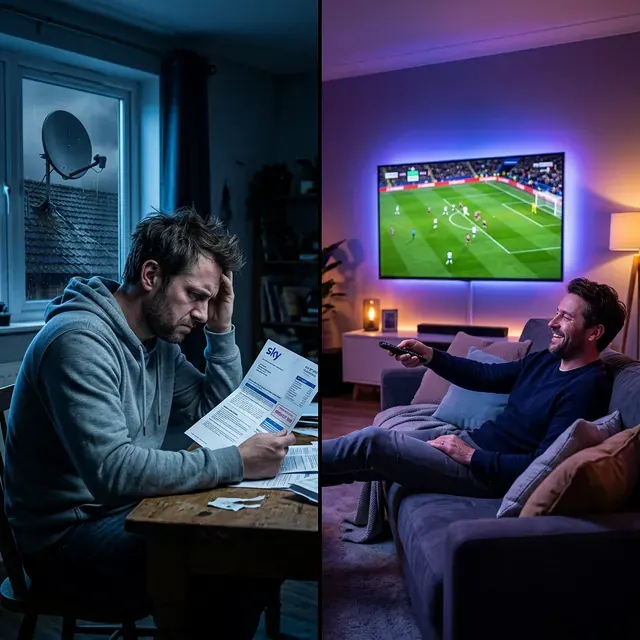
Cable television is usually paid every month. The base price looks reasonable, but sport packs, film packs, a second decoder and the decoder rental itself quickly add up. Promotions often end after a few months.
IPTV is paid per period. You pay once for 3, 6, 12 or 24 months, and everything is included: live television, sport, films and series. There is no rental fee because you use your own device. Our current prices are on the IPTV prices page; per month, the longer periods cost a fraction of a typical cable bundle with sport.
2. Equipment
With cable you rent a decoder, often one per television. It takes space, it has its own remote control and it has to be returned when you stop.
With IPTV you use what you already have: the app store of your Smart TV, a Fire TV Stick, an Android TV player or your phone. If you want a dedicated device, a stick costs less than a few months of decoder rental. Compare the options on the IPTV devices page.
3. Picture quality
Cable gives a very consistent picture because the signal does not depend on your home network. Most cable channels are in HD; 4K is rare and usually costs extra.
IPTV can reach 4K where the source exists, but the result depends on your connection. On a wired connection with 30 Mbps or more, the picture is excellent. On weak Wi-Fi it can stutter. This is the main point where cable is more forgiving, and the reason we recommend testing first.
| Point | Cable TV | IPTV |
|---|---|---|
| Payment | Monthly, plus options | One payment per period |
| Contract | Often 12 months or longer | None |
| Equipment | Rented decoder | Your own device |
| Maximum quality | Mostly HD | Up to 4K |
| Screens | One per decoder | TV, stick, tablet, phone, computer |
| Depends on home Wi-Fi | No | Yes |
| Moving house | Paperwork and technician | Log in at the new address |
4. Flexibility and screens
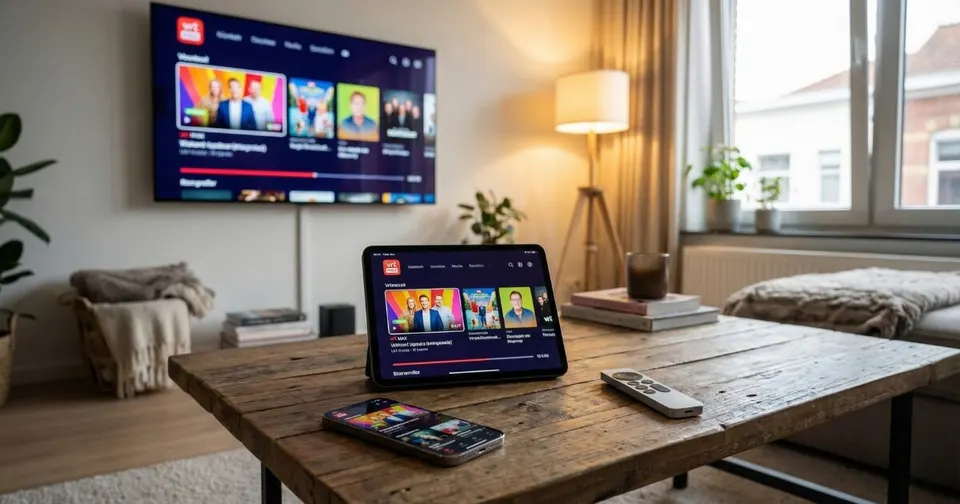
This is where IPTV clearly wins. The same login works on the living room television, on the tablet in the kitchen and on your phone on holiday. You can watch on one screen at a time, and you can switch between them freely. With cable, every extra screen usually means an extra decoder and an extra fee.
5. Content
Cable providers offer a fixed list of Belgian channels, with international and sport channels in paid packs. IPTV gathers Belgian and international television, sport, films and series in one catalogue. For households that speak several languages, or that follow football abroad, the difference is large.
Cable providers do have one advantage: their own replay and recording functions are fully integrated. With IPTV, those functions depend on the app you choose. TiviMate, for example, offers recording; the IPTV apps page lists what each player does.
6. Reliability
A cable network is built for one purpose and is very stable. IPTV shares your internet connection with every other device in your home. On a normal evening this makes no difference, but if someone downloads a large game during a match, you may notice it.
The solution is simple: a cable to the television or the stick, a decent router, and not too many heavy downloads during live sport. Our article on IPTV buffering explains all the fixes.
7. Installation and switching
Installing cable television often means waiting for a technician or a parcel. Stopping means respecting a notice period and returning the decoder.
Installing IPTV takes a few minutes: download an app, enter three login fields and start watching. Stopping simply means not renewing. Many people switch gradually: they keep their internet subscription, cancel only the television part and keep a cable decoder until the end of the contract while they test IPTV.
When cable TV is still the better choice
- Your internet connection is slow (under 15 Mbps) or unstable.
- You only watch a handful of Belgian channels and never use other screens.
- You want an all-in-one solution with no app to choose at all.
When IPTV is the better choice
- You have fibre or a good cable internet connection.
- You want sport, films and international television without paying for several packs.
- You watch on more than one screen, or you travel.
- You prefer to pay once and avoid long contracts.
The verdict
In the comparison IPTV vs cable TV, IPTV wins on price, flexibility and content, while cable wins on independence from your home network. For most Belgian households with a modern connection, IPTV gives more for less. The only way to be sure is to try it on your own screen, at the time you usually watch.
Want to know more about the technology first? Read what is IPTV. For an independent overview of television distribution in Belgium, the regulator BIPT publishes consumer information.
IPTV versus satellite: the third option
Some Belgian homes, especially in rural areas, still use a satellite dish. Comparing IPTV versus satellite gives a similar result to the comparison IPTV vs cable TV. A dish does not depend on internet speed and works where fibre has not arrived. On the other hand, it needs a clear view of the sky, a correct alignment and a receiver for every television. Storms and heavy snow can interrupt the picture.
IPTV needs none of that hardware. If your home has a decent internet connection, it is usually the simpler choice. If your internet is weak, satellite remains a valid alternative.
IPTV or decoder: what about the remote control?
A detail many people forget when they compare IPTV or decoder is daily comfort. With a decoder, the remote control is designed for that box alone. With IPTV, you use the remote of your television or your stick. Good apps such as TiviMate are built for a remote and feel very close to a decoder: channel up, channel down, guide button. Others are designed for touch screens and work better on a tablet.
Our advice is to try the app we recommend for your device first. Most people are used to it after one evening.
How to switch to IPTV without losing anything
If the comparison IPTV vs cable TV convinces you, you can switch to IPTV in a few calm steps.
- Test first. Ask for the free trial and watch on the device you will use, at the time you usually watch.
- Check your contract. Look up the notice period of your television subscription and whether your internet stays the same price without television.
- Order your period. Many people start with 3 or 6 months; see the IPTV 3 months plan.
- Install and organise. Hide categories you never use, mark your favourite channels and set a PIN for adult categories.
- Return the decoder when your cable television contract ends.
What households say after switching
The feedback we receive on WhatsApp after the comparison IPTV vs cable TV is fairly consistent. People appreciate the lower cost and the sport included in the price. The first days, they miss the familiar decoder menu; after a week they mostly use favourites and the guide and no longer think about it. The one recurring question concerns Wi-Fi, which is why we always start with a quick check of the connection.
In the end, IPTV vs cable TV is not a question of good or bad technology. It is a question of what fits your home, your connection and the way you watch.
Questions
Frequently asked questions
Is IPTV cheaper than cable TV?
In most cases, yes. IPTV is paid once per period and includes sport, films and series. Cable adds monthly fees for packs and decoder rental.
Is the picture as good as cable?
On a stable connection, yes, and up to 4K where available. On weak Wi-Fi, cable is more consistent. A cable to the device solves most issues.
Can I keep my internet and stop only cable TV?
Usually yes. Check the notice period in your contract. Many customers keep internet and drop only the television part.
Can I test before cancelling my cable subscription?
Yes. Ask for the free 2-hour trial on WhatsApp and compare both on the same television.